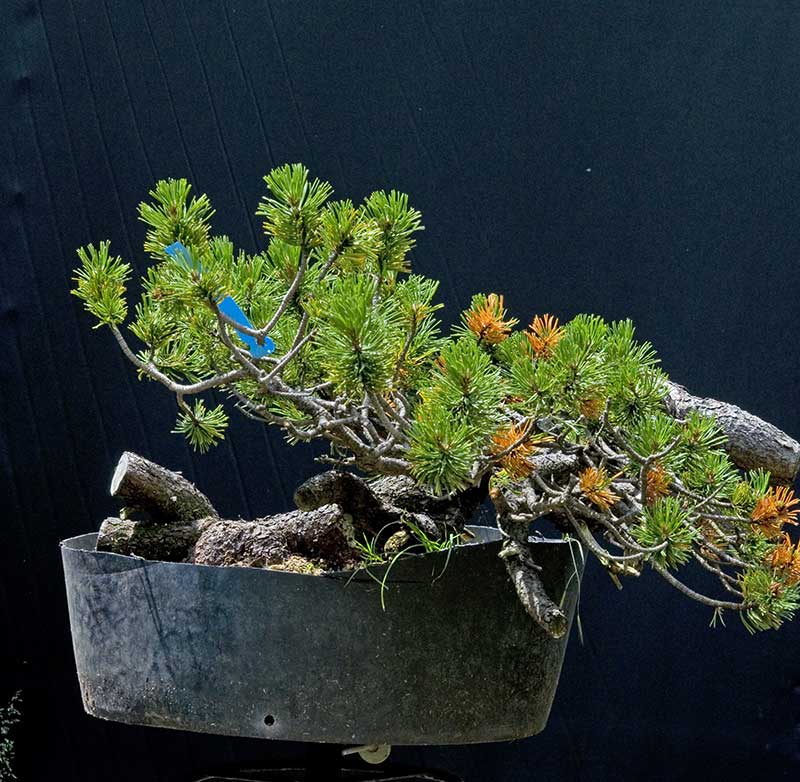
Field elm, Ulmus campestre. From nursery stock, started in 1988. First image 1994, second image 2008, third image 2010.
So this tree is in training since almost 25 years. And yet it never was on an exhibit and it seems that it never would. Why that, the tree looks pretty good? Well, the crown is OK, but the nebari is lousy. I air-layered the tree in 2006. But the result was not what I expected. The roots were very one-sided. Then I just put substrate on top of the nebari for a few years and hoped that an elm would ail-layer itself. Well, it did not. So today Walter and I decided to air-layer it a second time.
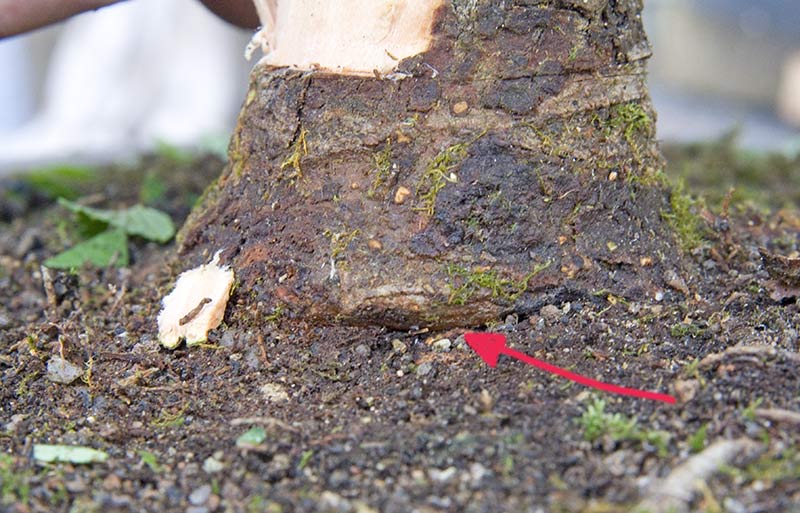
First the cut. The distance between the cuts must be as long as you dare, the longer the better. Otherwise the air-layer will probably not work. The cambium which is the brown soft stuff under the hard bark must be removed totally. TOTALLY! Otherwise it will not work.Then the cage. Then some substrate, then sphagnum moss from my pond, then some substrate again. That's it. Now we water the whole tree including the nest every day and see what happens until September. The pot and the cage are fed like all trees every ten days or so. No exception for air-layered trees. They are treated all the same as other trees.
Please don't bother me with mails about the substrate. It does not matter, what exactly you take as long as it is modern substrate! It's exactly the same stuff that I plant EVERYTHING into. If you don't have real live sphagnum moss take some other moss from the garden or forest.
And don't worry about the tree. Less than one tree out of 100 treated like this dies. But more than 50 % of air layers don't work or don't work well. The main reason is that folks are too timid. As you can see Walter is bold. Well, it' not his tree anyway. Should an air-layer not work satisfactory, repeat it next year.
We will report about progress.